Hot Water Line Leaks: Warning Signs You Can Spot
Warm spots on the floor, a spinning meter with everything off, and a water heater that never stops running - here are the hot water line leak signs Missouri City homeowners catch first.
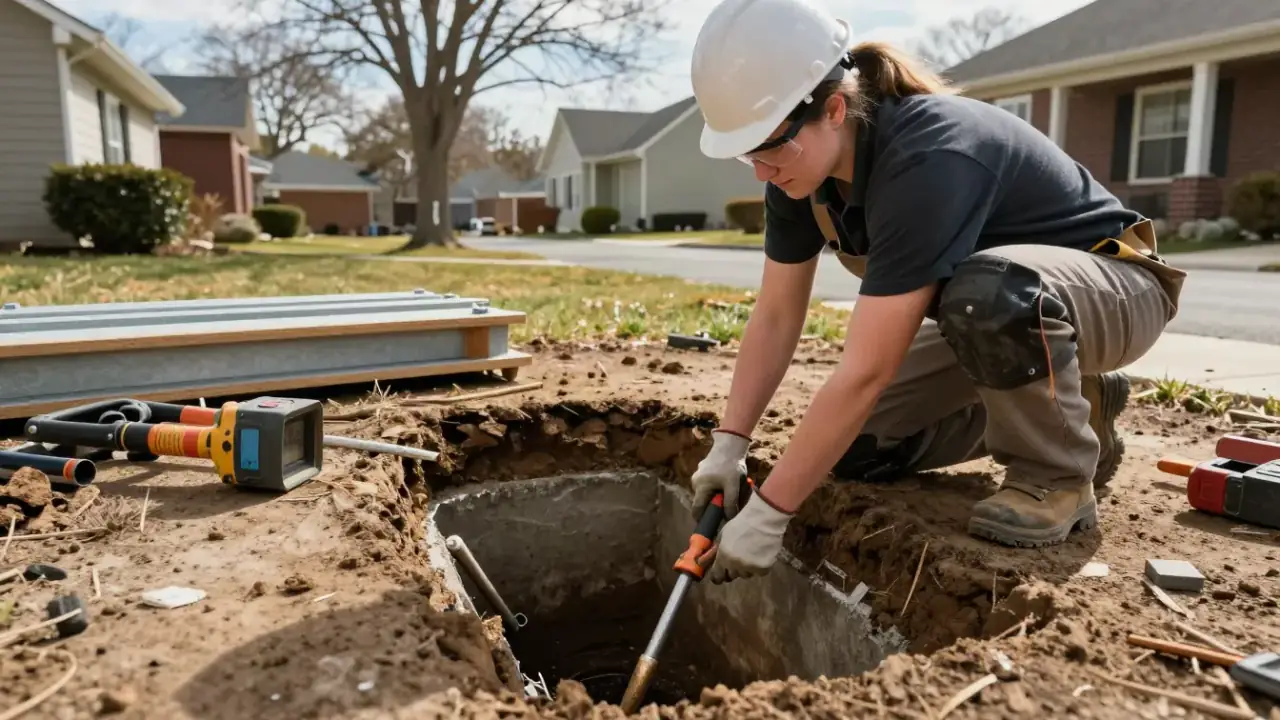
The hot water line leaks warning signs you can spot come down to three things: a warm or hot spot on the floor, a water meter that keeps spinning with every fixture off, and a water heater that runs far longer than it should. If you have two of those three, you almost certainly have a hot water line leaking under your slab. The rest of this post walks through each sign in detail, what causes these leaks in Fort Bend County soil, and how we confirm the problem before anyone cuts concrete.
We are Missouri City Slab Leak Repair, and we have opened enough slabs in this town to know that hot water lines fail differently than cold ones. Hot water attacks pipe walls from the inside, and the damage shows up in specific places. For homeowners who want the full picture of our Slab Leak Repair Missouri City TX work, that page covers the whole process from detection to final test.
What a Hot Water Line Leak Actually Is
A hot water line leak is a pressurized failure in the pipe that carries heated water from your water heater to fixtures, and it is different from a drain leak because it runs continuously - 24 hours a day, whether you are using hot water or not. That constant pressure is why hot water slab leak symptoms in Texas show up faster and cost more than a drain line problem.
Your supply lines sit under the slab, usually 12 to 24 inches down, buried in the soil your foundation rests on. When one fails, water does not just sit there. It moves. It follows the path of least resistance - under the vapor barrier, along the rebar, out to the nearest edge of the slab.
That is why the first sign is often not a puddle. It is a warm patch of tile in the hallway, or a baseboard that has started to swell in a room nowhere near the water heater.
Copper was the standard in most Missouri City homes built before 2000. PEX and CPVC took over after that. Copper hot lines fail from the inside out - the heat accelerates the corrosion, so the hot side usually goes first. On a 1980s Quail Valley or Briargate home, we see hot line failures roughly two to three times as often as cold.
The Warning Signs You Can Spot Without Tools
You do not need a thermal camera to catch most of these. Here are the hot water line leak indicators Missouri City homeowners notice first, roughly in the order they tend to appear.
1. A warm or hot spot on the floor
This is the classic tell. Walk barefoot across your tile or vinyl in the morning and pay attention to your feet. A hot water line leak under slab will heat the concrete above it, and that heat transfers through the flooring.
The spot is usually 1 to 3 feet across and stays warm even when the heat is off. If you have carpet, press your palm down - you will feel it through the pad.
2. The water meter never stops
Shut off every faucet, the ice maker, the irrigation, and the washing machine. Then watch the low-flow indicator on your meter - the little triangle or dial that spins on tiny flows.
If it is still moving after 10 minutes, water is leaving the system somewhere. A hot water line leak will keep that dial creeping even when nothing in the house is running.
3. Your water heater runs constantly
A leaking hot line is an open-ended demand on your water heater. The tank reheats, the water escapes into the slab, and the cycle repeats. On a gas unit you will hear the burner kicking on far more often than usual. On electric, your bill climbs without any change in how you use hot water.
If the tank itself is dry and the T&P valve is not dripping, the loss is downstream - under the floor.
4. Damp baseboards, swollen trim, or a musty smell
Water under a slab has to go somewhere. It wicks up through the concrete at the edges and shows up as dark staining at the base of the wall, paint that bubbles, or baseboards that feel soft when you press them.
In Sienna and Riverstone, where a lot of homes sit on heavily compacted fill, we see this at interior walls before it ever reaches an exterior edge. If one room smells musty and the rest of the house is fine, that is a strong signal.
5. Cracks in tile or a floor that feels different underfoot
Hot water softens and expands the soil under the slab. That movement cracks grout lines and can make a section of floor feel slightly raised or spongy. New cracks that run in a line across several tiles are worth investigating.
6. A water bill that jumped
Compare this month to the same month last year. A hot water line leak of about 1 gallon per hour adds roughly 720 gallons a month - enough to move a residential bill by $25 to $60 depending on your rate. A bigger leak can double it.
Can You Hear a Hot Water Line Leak in Missouri City Texas?
Yes, sometimes - a hot water line leak in Missouri City Texas is often audible as a faint hiss, a steady trickle, or a low rushing sound when the house is quiet, especially at night. Pressurized water escaping a pinhole makes noise. You just have to be in the right room at the right time.
Try this: turn off the HVAC, the fridge, and anything with a fan, then stand still in the hallway or bathroom nearest the warm spot. Listen for a sound that does not stop when you turn off a faucet.
What you will not usually hear is a drip. Under a slab, water hits soil, not a pan. The sound is more of a soft hiss or a hum that seems to come from the floor itself.
If you hear nothing, that proves nothing. Most hot line leaks under slab are silent. The warm floor and the spinning meter are the reliable signals.
What Causes Hot Water Line Leaks in Missouri City?
Hot water line leaks in Missouri City come from four main causes: heat-accelerated corrosion inside copper, abrasive soil and slab movement, high water pressure, and poor original installation. Our local soil and climate push all four harder than most of the country.
Heat plus copper. Hot water dissolves the protective layer inside copper pipe faster than cold. At 130°F, copper that would last 50 years on a cold line may fail at 25 to 30. Most of the failures we open are on the hot side, and most are pinhole leaks that have been weeping for months.
Soil and slab movement. Fort Bend County sits on expansive clay. It swells when it is wet and shrinks when it dries, and that cycle moves the slab. Pipes that were bedded correctly can still get abraded against rock or rebar over 20 or 30 years.
Pressure. Anything above 80 psi stresses every joint and fitting in the house. We check pressure on every call, and it is common to find homes running 90 to 110 psi with no regulator installed.
Installation. Kinked PEX, unsupported runs, or copper laid directly against rebar without sleeving all shorten the life of the line. We see this most in homes from the late 1990s and early 2000s.
If you are in one of the older neighborhoods - Slab Leak Repair in Quail Valley is a big part of our week - the copper is often 35 to 45 years old and past its expected service life on the hot side.
How We Confirm It: Detection Before We Break Concrete
We do not start cutting until we know exactly where the leak is. Our technicians use acoustic listening equipment, thermal imaging, and pressure isolation to narrow the location to within about a foot before any concrete comes up.
The process usually runs 60 to 90 minutes:
- Isolate the hot and cold systems and pressurize each separately.
- Walk the slab with an acoustic microphone to hear the escape point.
- Confirm with thermal imaging - the hot line shows as a warm streak on the slab surface.
- Mark the location and give you a written price before we cut.
Once we have the spot, we open the smallest access that lets us make the repair. Sometimes that is a 2-foot square in a closet. Sometimes the better answer is slab leak tunneling Missouri City TX, where we go under the slab from outside and leave your floors untouched.
For a single failed hot line, the repair itself is often done the same day. Typical 2026 pricing in this area runs $1,200 to $3,500 for a straightforward under-slab hot line repair, and $4,500 to $9,000 if tunneling is required. We give you the number before we start.
If the line is too far gone to patch - thin walls throughout, multiple pinholes - we will tell you that too. In those cases, hot water line leak repair Missouri City TX may mean rerouting the line overhead or repiping the hot side rather than chasing one leak at a time.
Common Mistakes We See Homeowners Make
The biggest mistake is waiting. A hot water line leak does not heal, and the damage it causes - foundation movement, mold, ruined flooring - costs far more than the repair.
Here is what we see most often:
- Assuming it is the water heater. If the tank is dry and the pan is dry, the water is going somewhere else. Replacing a working heater does not fix a slab leak.
- Turning off the water and forgetting about it. Shutting the main stops the flow, but the soil under the slab stays saturated for weeks. Mold and slab movement continue.
- Patching the floor first. We have seen homeowners replace tile and baseboards before the leak is fixed. It all comes back up.
- Ignoring a small bill increase. A pinhole leak at 1 gallon per hour is easy to dismiss. Over six months it is 4,300 gallons and a lot of soil movement.
- Hiring on price alone. The cheapest quote is often the one that cuts the biggest hole. Ask how the leak will be located before anyone quotes a repair.
One more: do not assume the leak is on the cold side just because the floor is cool. Hot lines cool as they travel. The only way to know is to isolate and test both systems.
When to Call a Professional
Call us when you have a warm floor spot plus a spinning meter, when your water bill has jumped more than 20% with no change in use, or when you see damp baseboards and a musty smell in one room. Any one of those is worth a look. Two of them and you should not wait the weekend.
We handle the whole job - detection, access, repair, and a pressure test before we leave. If the hot line is failing in more than one place, we will walk you through your options, including rerouting the line overhead so you never have to open the slab again.
Homeowners in the newer master-planned neighborhoods call us for the same reasons. Slab Leak Repair in Sienna and the surrounding communities make up a steady share of our work, and the symptoms look identical to what we see in 1970s homes - warm tile, high bill, no visible puddle.
Frequently Asked Questions
What are the warning signs of a hot water line leak in Missouri City TX?
The top four are a warm spot on the floor, a water meter that keeps spinning with everything off, a water heater that runs constantly, and a water bill that jumped 20% or more. Damp baseboards and a musty smell in one room usually follow within a few weeks.
How to spot a hot water slab leak in Missouri City?
Walk the floor barefoot in the morning and feel for a warm patch 1 to 3 feet across. Then shut off all fixtures and watch your meter's low-flow dial for 10 minutes. If it moves and the floor is warm, you have a hot water slab leak.
Can you hear a hot water line leak in Missouri City Texas?
Sometimes. A pressurized hot line leak often makes a faint hiss or low rushing sound when the house is quiet. Turn off the HVAC and fridge and listen near the warm spot. Most under-slab hot line leaks are silent, so no sound does not mean no leak.
What causes hot water line leaks in Missouri City?
Heat-accelerated corrosion inside copper is the main cause, followed by slab movement on our expansive clay soil, water pressure above 80 psi, and installation defects. Hot lines fail two to three times as often as cold lines in homes built before 2000.
How much does hot water line leak repair cost in Missouri City?
In 2026, a straightforward under-slab hot line repair runs $1,200 to $3,500. Tunneling access pushes that to $4,500 to $9,000. Rerouting or repiping the hot side is a separate scope and priced after detection.
Get Help with Slab Leak Repair in Missouri City
If you have a warm floor, a spinning meter, or a water bill that does not make sense, we can find the leak and fix it - usually the same day. Call Missouri City Slab Leak Repair at (281) 326-6169 and we will get a technician out to confirm what is happening under your slab.