How Expansive Clay Soil Stresses Your Underground Plumbing
The black clay under most Missouri City homes swells when it rains and shrinks in drought, flexing your under-slab pipes until they crack. Here's how it happens and what to do.
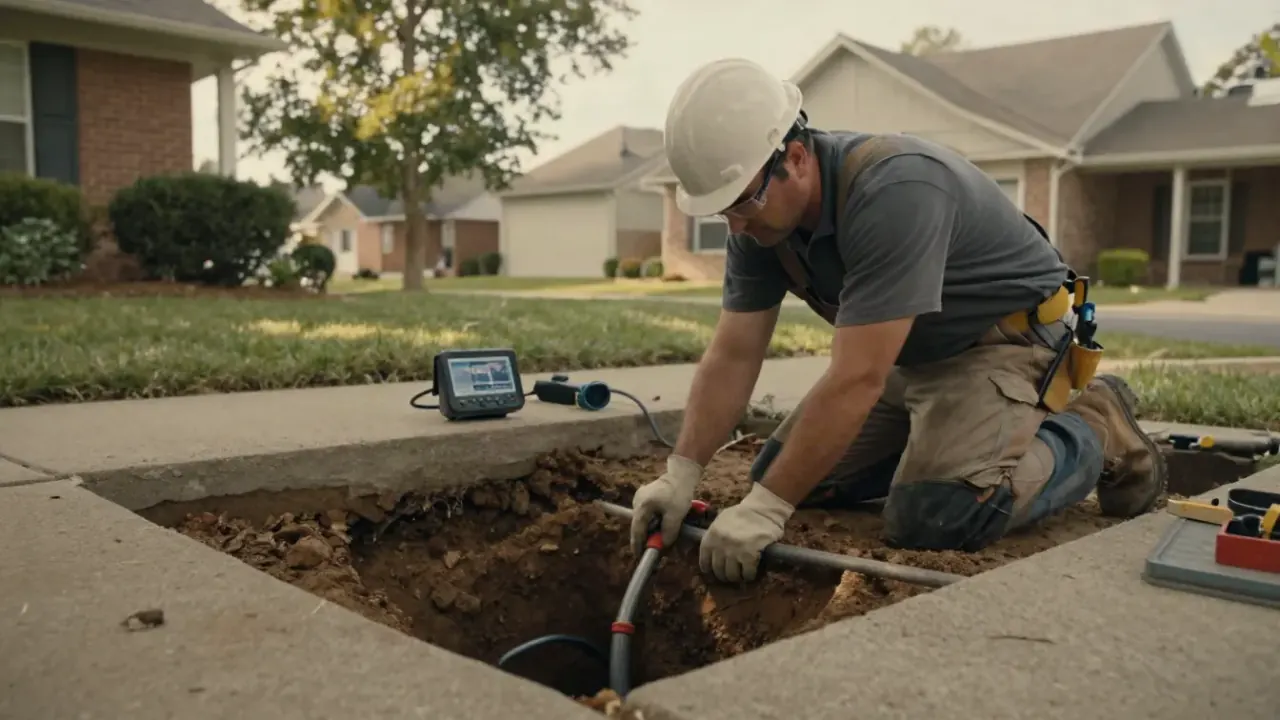
Expansive clay soil stresses underground plumbing by swelling when it absorbs water and shrinking as it dries, and that constant flexing pushes, pulls, and bends the pipes running beneath your foundation until they crack or pull apart at the joints. In Missouri City, where most homes sit on the same dark, high-plasticity clay that covers the Katy Prairie and the Brazos bottomlands, that cycle repeats every time we go from a wet spring to a dry August.
What follows is what we see on job sites across Fort Bend County: how the clay actually moves, which pipes fail first, the signs homeowners overlook, and what it takes to stop the damage before it reaches your foundation.
Why Clay Soil Moves So Much in Missouri City
The soil under Missouri City is dominated by what geotechnical engineers call expansive clay - a soil with a high shrink-swell potential that can change volume by 6 to 10 percent as its moisture content rises and falls. That sounds small until you multiply it across a 40-foot foundation. A slab that sits on soil expanding 8 percent can be lifted or dropped by an inch and a half at the edges, and that movement does not happen evenly.
Houston-area summers routinely push soil moisture down to 5 percent or less in the top 3 feet. Then a single tropical system can dump 4 inches of rain in a day and drive that same soil back toward saturation. The clay goes from hard and cracked to soft and swollen in a week. Your foundation, and everything plumbed through it, rides that wave.
We see the worst movement in neighborhoods built on fill dirt - Sienna, Riverstone, and the newer sections of Lake Olympia are common examples. Fill compacts unevenly, drains unevenly, and moves unevenly. Homes on original grade, like much of Quail Valley, tend to move less dramatically but still move.
How That Movement Reaches the Pipes Under Your Slab
Your water and drain lines sit in the soil directly beneath the concrete, usually 12 to 24 inches down. They are not anchored to the slab. They are anchored to the dirt. So when the dirt shifts, the pipes shift with it - but the slab above does not, and the point where a pipe passes through the slab or a footing becomes a stress point.
Three things happen at once:
- Shear. The slab stays put while the soil below it slides sideways, cutting into the pipe wall like a dull blade.
- Bending. A pipe spanning a void left by shrinking clay sags in the middle. Copper work-hardens and splits. PVC cracks at the bell.
- Joint separation. Fittings and couplings are the weakest link. A quarter-inch of movement is enough to break a solder joint or pull a CPVC fitting loose.
This is why clay soil slab leaks in Missouri City tend to show up in clusters - one leak gets fixed, and six months later there is another one 8 feet away. The soil did not stop moving after the first repair.
The Four Failure Points We See Most Often
Not every pipe under a Missouri City slab is equally vulnerable. After enough slab leak calls, patterns emerge.
1. Copper supply lines under the slab
Copper is the most common under-slab supply material in homes built before 2000. It is also the least forgiving. Copper under a moving slab develops pinhole leaks first, then full splits. If your home is 25 years old and still on original copper, you are in the window where we start seeing failures.
2. Hot water lines
Heat accelerates everything. A hot water line under a slab expands and contracts with every shower, and the surrounding clay expands and contracts with every rain. The two cycles fight each other, and the hot side usually loses first. That is why a hot water line leak repair is often the first slab leak a homeowner ever deals with.
3. Drain lines at the slab penetration
Where a cast iron or PVC drain passes through the concrete, the pipe and slab are effectively welded together. When the soil below drops, the pipe is pulled down while the slab holds. The result is a shear crack right at the penetration - often hidden under a bathroom or kitchen floor.
4. The main water service line
The line from the meter to your house crosses undisturbed soil and backfilled trench, two materials that move differently. That transition zone is where main water line repair calls concentrate. If you are seeing wet spots in the yard between the meter and the house, that is usually the culprit.
The Warning Signs Homeowners Miss
Slab leaks from clay soil rarely announce themselves with a geyser. They start small and get blamed on something else. Here is what to watch for, roughly in the order they tend to appear:
- A water bill that jumps 15 to 30 percent with no change in habits. That is the earliest signal, and it is the one most people ignore.
- The sound of running water when every fixture in the house is off. Put your ear to the floor near a bathroom or the water heater closet.
- Warm spots on a hard floor. A hot water slab leak heats the concrete above it. Barefoot is a better detector than any tool.
- Hairline cracks in tile or sheet vinyl that appear or widen over a few months.
- Musty smell or unexplained dampness at the baseboard, especially in a hallway or closet with no plumbing on the wall.
- A slab edge that has visibly lifted or dropped relative to the driveway or walkway.
Any two of those together justify a professional water leak detection visit. One alone is worth watching for a week.
How Does Clay Soil Affect Underground Plumbing in Missouri City TX?
Clay soil affects underground plumbing in Missouri City by transferring foundation movement directly into the pipes, which causes leaks at joints, fittings, and slab penetrations rather than in the middle of a straight run. The soil is the force; the pipe is what breaks.
Two local factors make it worse here than in most of the country. First, our wet-dry cycle is extreme - we can swing from drought restrictions to flash flooding in the same month. Second, most of our housing stock is slab-on-grade. There is no crawl space to inspect and no basement to drain into. When a pipe under the slab fails, the water has nowhere to go except up through the concrete or out into the yard.
Homeowners in Slab Leak Repair in Sienna deal with this on a slightly different schedule than folks in Quail Valley Slab Leak Repair territory - newer construction versus 1970s and 80s builds - but the mechanism is identical. Clay moves, pipe cracks, water finds a path.
What to Watch Out For
The biggest mistake we see is treating a slab leak as a one-time event. It is not. If the soil caused the first leak, it will cause the next one unless something changes.
Other things that cost homeowners money:
- Watering the foundation inconsistently. Soaker hoses run every day for a month and then abandoned do more harm than no watering at all. Steady and moderate beats heavy and sporadic.
- Letting a gutter downspout dump next to the slab. That concentrates water at one corner and guarantees uneven swelling.
- Ignoring a small leak because the water bill is "not that bad yet." A pinhole leak at 60 psi can waste 30,000 gallons a month and undermine the soil under your foundation.
- Hiring a repair that only patches the pipe. If the soil is still moving, the patch is temporary. That is why we often steer homeowners toward pipe rerouting Missouri City TX or epoxy pipe lining Missouri City TX instead of another dig-and-patch.
- Assuming a foundation crack means the foundation is the problem. Half the time the foundation is fine and the leak underneath it is the actual cause.
When to Call a Professional
Call us when you have a water bill that does not match your usage, a warm spot on the floor, or the sound of water running with everything shut off. Those three signs together point to an active slab leak, and the sooner we locate it, the smaller the repair.
Our team at Missouri City Slab Leak Repair uses acoustic listening, thermal imaging, and pressure isolation to pinpoint the leak before we open anything. We find it, fix it, and pressure-test the line before we leave. If the surrounding soil is still moving, we will tell you what to do about that too - because fixing the pipe without addressing the clay is how homeowners end up calling us back in a year.
If you are not sure whether you have a leak at all, a high water bill leak investigation Missouri City TX is the cheapest way to find out. We would rather rule it out than dig up a floor for nothing.
Frequently Asked Questions
How does clay soil affect underground plumbing in Missouri City TX?
Clay soil swells when wet and shrinks when dry, moving 6 to 10 percent in volume. That movement bends and shears the pipes under your slab, causing leaks at joints and slab penetrations. In Missouri City, the wet-dry swing is extreme enough to crack copper and PVC within 20 to 30 years.
Can expansive clay soil cause slab leaks in Missouri City?
Yes - it is the leading cause of slab leaks in Fort Bend County. The soil moves, the pipe does not, and something has to give. Most slab leaks we repair in Missouri City trace back to soil movement rather than a manufacturing defect or water chemistry problem.
What should I do about clay soil and plumbing in Missouri City Texas?
Keep soil moisture steady with a soaker hose on a timer, direct downspouts at least 5 feet from the slab, and get any unexplained water bill spike investigated within a week. If you already have a leak, fix the pipe and address the soil at the same time.
How do I protect pipes from clay soil in Missouri City?
Three things work: consistent foundation watering, trenchless options like trenchless pipe lining Missouri City that create a flexible barrier inside the pipe, and rerouting vulnerable runs out of the highest-movement zones. Repiping with PEX also helps because PEX flexes where copper cannot.
How much does slab leak repair cost in Missouri City in 2026?
Typical 2026 pricing in this area runs $500 to $1,200 for detection and a spot repair, $2,500 to $6,000 for tunneling and pipe replacement, and $8,000 to $15,000 for whole-house repiping. The number depends on how deep the line sits and how much concrete we have to open.
Get Help With Slab Leak Repair in Missouri City
If the clay under your home is winning the fight against your plumbing, we can stop it. We handle everything from a single hot water line leak repair Missouri City TX to full whole-house repiping Missouri City TX, and we do it without tearing your house apart.
Call (281) 326-6169 and we will schedule a leak detection visit at your Missouri City home. We find the leak, fix it, and test the line before we leave - and we tell you upfront what it will cost.