What Is a Post-Tension Slab and Why It Matters for Plumbing Repairs
Post-tension slabs hide steel cables under tension. Cut one during a plumbing repair and you can compromise the foundation. Here's how we work around them in Missouri City.
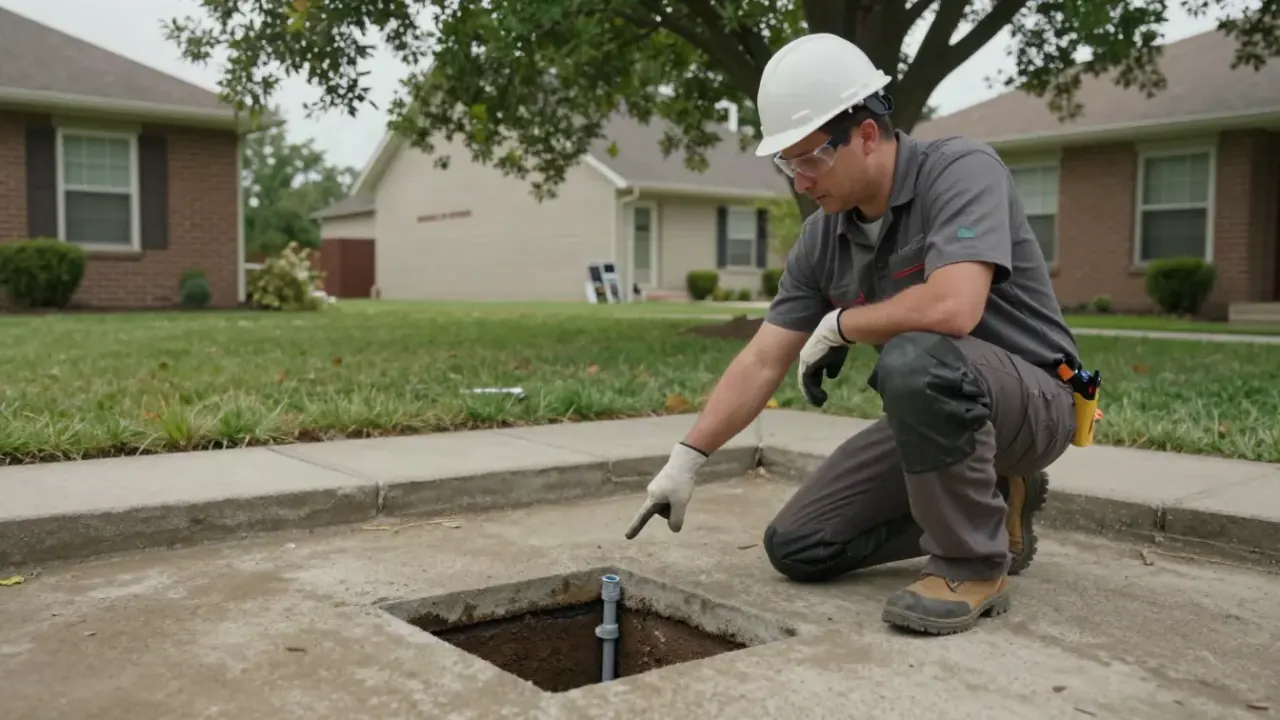
A post-tension slab is a concrete foundation that has steel cables running through it under tension, which lets it span expansive soils without cracking. That matters for plumbing repairs because cutting one of those cables during a leak fix can compromise the entire foundation - so we map the cable layout before we touch the concrete. This post explains how post-tension slabs work, why they are everywhere in Missouri City, and how we repair plumbing under them without cutting a single tendon.
What Is a Post-Tension Slab?
A post-tension slab is a reinforced concrete foundation that uses high-strength steel tendons, or cables, stretched through the slab and anchored at the edges to compress the concrete. That compression counteracts the soil's tendency to expand and shrink, which is the main reason foundations crack in this part of Texas.
In a conventional slab, rebar sits inside the concrete and only starts working once the concrete cracks. A post-tension slab works the other way: the cables are stressed after the concrete cures, so the slab is under compression from day one. That is why a post-tension slab can be thinner - often 8 to 10 inches versus 12 to 14 inches for a rebar slab - while carrying the same load.
Here is the part that matters for plumbing: those cables run in a grid, typically 3 to 4 feet apart, and they curve upward near the edges to anchor into the beam. They are not in a neat straight line. If you cut into the slab without knowing where they are, you can hit one.
Why Post-Tension Slabs Are Common in Missouri City, TX
Missouri City sits on some of the most active clay soil in Fort Bend County, and post-tension slabs are the standard answer to that movement. The clay here swells when it gets wet and shrinks hard in a drought, which puts enormous pressure on a foundation. A post-tension slab resists that pressure better than a conventional slab, so most homes built in this area since the 1990s use one.
If your house is in Sienna, Riverstone, or any of the newer master-planned communities along Highway 6, there is a good chance you have a post-tension slab. Older neighborhoods like Quail Valley Slab Leak Repair are a mix - some homes have post-tension, some have rebar, and some have pier-and-beam. We confirm the slab type before we quote any under-slab work.
You can usually find out which type you have by checking your original engineering drawings, which are often filed with the builder or the city. If you do not have them, we can identify the slab type on site by scanning for tendons.
Why Post-Tension Slabs Matter for Slab Leak Repair
Post-tension slabs matter for slab leak repair because the cables inside them are under 20,000 to 30,000 pounds of tension each, and cutting one can cause a sudden release of that energy. That is not a scare tactic - it is a real hazard. A cut tendon can crack the slab, shift the foundation, and cost $8,000 to $15,000 or more to repair, far more than the plumbing leak you were trying to fix.
That does not mean you cannot repair plumbing under a post-tension slab. It means the repair has to be planned around the cable layout. We use a combination of ground-penetrating radar and the original tendon drawings to map every cable before we cut. If a leak sits directly under a tendon, we tunnel under the slab from the outside rather than cut through it.
This is also why we never recommend jackhammering a post-tension slab to find a leak. The risk of hitting a cable is too high, and the repair cost if you do is far higher than the cost of doing it right the first time.
How We Find Leaks in a Post-Tension Slab
We find leaks in a post-tension slab by combining acoustic listening, thermal imaging, and pressure isolation - never by breaking concrete first. The goal is to pinpoint the leak within a few inches before we open anything up, so we only cut where we absolutely have to.
Here is the sequence we run on a typical Missouri City home:
- Pressure test the system. We isolate the hot and cold lines and pressurize each one to confirm which side is leaking.
- Acoustic listening. A ground microphone picks up the sound of water escaping under pressure. On a quiet morning, we can often hear a pinhole leak from 6 to 8 feet away.
- Thermal imaging. A hot water leak shows up as a warm spot on the floor. We use an infrared camera to map the temperature difference.
- Tendon scan. Before any cutting, we scan the slab with ground-penetrating radar to mark the cable grid.
If you have already noticed a spike in your water bill but no visible leak, start with a water leak detection Missouri City visit. We can usually tell you whether the loss is under the slab or somewhere else in the system within the first hour.
How to Repair Plumbing in a Post-Tension Slab
We repair plumbing in a post-tension slab one of three ways, depending on where the leak sits relative to the cables: spot repair through a small cut, tunneling under the slab, or rerouting the line above the slab. The right choice depends on the cable layout and how much pipe is affected.
Spot repair through the slab
If the leak is in an open bay between tendons, we cut a small access hole - usually 18 by 18 inches - repair the pipe, and patch the concrete. This is the fastest option and the least disruptive. We only use it when the scan shows at least 6 inches of clearance from any cable.
Tunneling under the slab
When the leak sits directly under a tendon, we tunnel in from outside the foundation. slab leak tunneling Missouri City TX lets us reach the pipe from below without cutting the slab at all. It takes longer - usually two to three days - but it protects the foundation and the cables.
Rerouting the line
If the pipe is failing in multiple spots, or if the leak is under a cable that cannot be safely accessed, we reroute the line through the attic or along the exterior wall. pipe rerouting Missouri City TX abandons the failing under-slab section and runs a new line above ground. It costs more upfront than a spot repair, but it ends the cycle of repeated leaks in the same pipe.
For a leak that is specifically in a post-tension slab, our post-tension slab leak repair Missouri City TX service covers the full process from scan to patch. We handle the tendon mapping, the repair, and the concrete work.
Common Mistakes We See With Post-Tension Slab Plumbing
The most common mistake we see is a homeowner or a general handyman cutting into a post-tension slab without scanning for cables first. It happens more often than you would think, and the repair bill for a cut tendon starts around $8,000.
Other mistakes we run into:
- Jackhammering to find the leak. A 30-pound jackhammer will go through a tendon in seconds. We use a concrete saw with a depth stop set to stay above the cable plane.
- Assuming the slab type. Not every Missouri City home has a post-tension slab. If you guess wrong and treat a rebar slab like a post-tension slab, you waste money on unnecessary scanning. If you guess the other way, you risk the foundation.
- Ignoring the second leak. Copper pipes in a post-tension slab often fail in clusters. If we repair one leak and do not pressure-test the rest of the line, you may be back in six months.
- Patching with the wrong concrete. A post-tension slab patch needs to match the original mix and cure time. A weak patch can crack and let water back in.
If your home is in one of the older neighborhoods like Briargate Slab Leak Repair, we also check for original copper lines that may be near the end of their service life. A 1980s copper line in this soil often fails in multiple spots within a few years.
When to Call a Professional
Call a professional the moment you suspect a slab leak in a post-tension home - do not wait to see if it gets worse. The signs are a hot spot on the floor, the sound of running water when nothing is on, a water bill that jumps by $50 or more in a month, or a musty smell near the baseboards.
Any of those signs in a post-tension slab means the repair has to be planned around the cables. We handle Slab Leak Repair Missouri City TX for post-tension homes every week, and we scan the slab before we quote the repair. If you are not sure whether you have a post-tension slab, we can tell you on the first visit.
Frequently Asked Questions
What is a post-tension slab in Missouri City TX?
A post-tension slab is a concrete foundation with steel cables stretched through it under tension. In Missouri City, it is the standard foundation for homes built since the 1990s because it resists the area's expansive clay soil better than a conventional rebar slab.
Can you repair plumbing under a post-tension slab in Missouri City?
Yes. We repair plumbing under post-tension slabs by scanning for cables first, then either cutting a small access hole between tendons, tunneling under the slab, or rerouting the line above ground. The repair method depends on where the leak sits relative to the cable grid.
Why are post-tension slabs important for slab leak repair in Missouri City?
They matter because the cables inside are under 20,000 to 30,000 pounds of tension. Cutting one during a repair can crack the foundation and cost $8,000 to $15,000 to fix. That is why we map the tendon layout before any concrete is cut.
How to find leaks in post-tension slab in Missouri City Texas?
We use acoustic listening, thermal imaging, and pressure isolation to pinpoint the leak within a few inches before cutting. A ground microphone picks up the sound of escaping water, and an infrared camera shows hot water leaks as warm spots on the floor.
Does a post-tension slab leak always require tunneling?
No. If the leak is in an open bay at least 6 inches from any cable, we can cut a small access hole and patch it. Tunneling is only needed when the leak sits directly under a tendon or when the pipe is failing in multiple spots.
Get Help With Slab Leak Repair in Missouri City
If you have a post-tension slab and you suspect a leak, we can scan the slab, find the leak, and repair it without cutting a cable. Call Missouri City Slab Leak Repair at (281) 326-6169 and we will schedule a diagnostic visit.